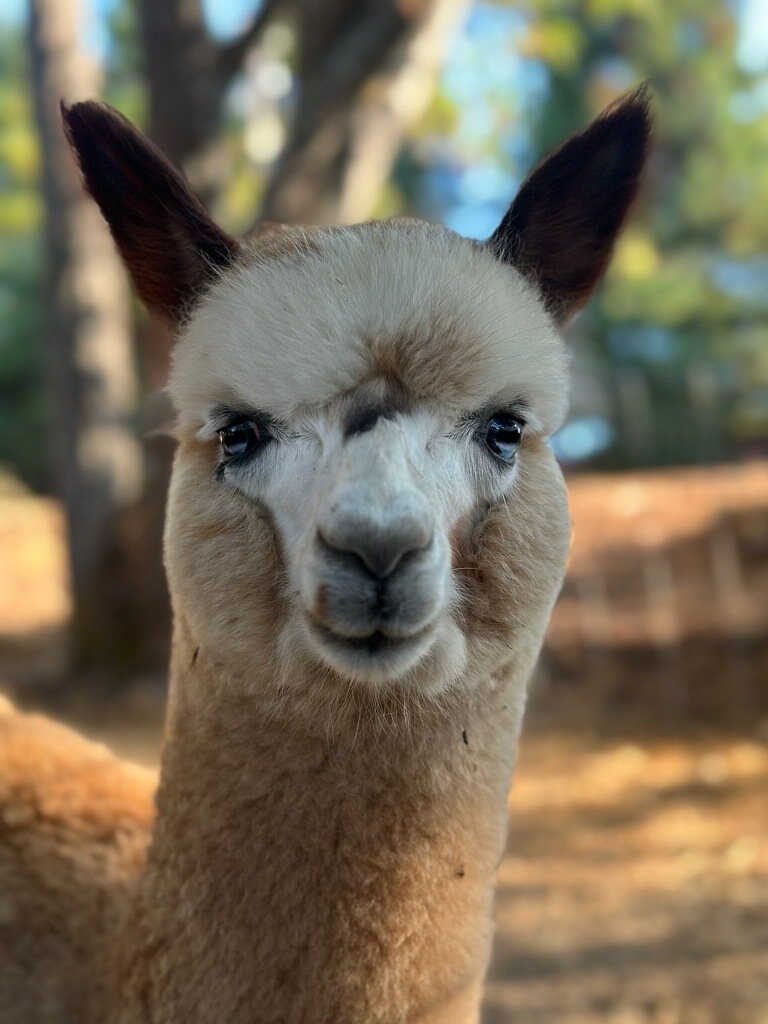
Lucky, The Smallest Alpaca in the United States
Lucky, whose full name is “Lucky to Be Alive,” was born on October 3, 2025. When I first noticed her, she was shivering on the ground with her mother nearby. Alpacas typically expect their offspring to stand and begin moving within the first hour, but Lucky was non-responsive, weak, and unable to get up.
I rushed her to Cotati Large Animal Veterinary Hospital, where she weighed in at just 7 pounds, about 40% less than a normal alpaca cria. It took the veterinary team nearly two hours to raise her body temperature enough to even get a reading. She was given goat colostrum and vitamin shots, and several hours later, I was able to bring her home.
Although she could suckle from a bottle, she could not stand on her own. For the first week, she could only stand with assistance and was unable to walk independently.
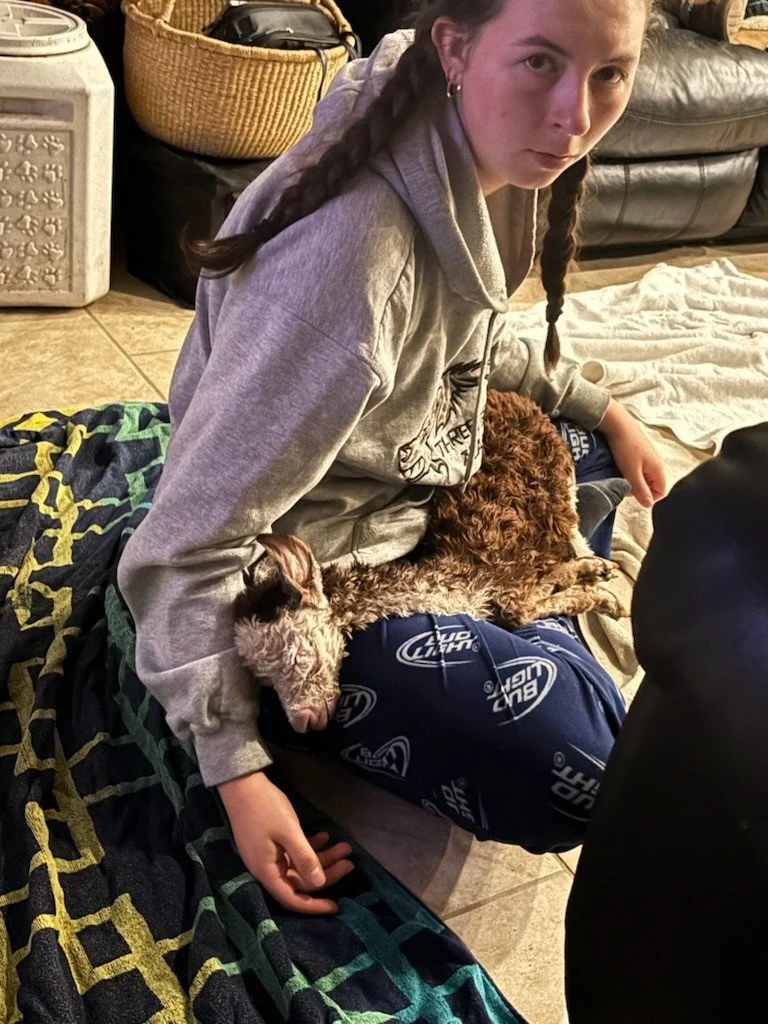
It was determined that Lucky was approximately three weeks premature. I could tell by the tilt of her ears, while the veterinarian based the estimate on her extremely low weight.
During the first week, she needed to be bottle-fed every two hours. By the second week, feedings were spaced out to every three hours. My husband and I already had a trip to Oregon planned, and since no one in the family volunteered to care for her around the clock, we packed her into a crate and brought her along. It turned into quite an adventure.
By then, she was able to walk, so she rode comfortably in a dog carrier. Every few hours, we would stop to feed her and let her get some exercise. We checked into pet-friendly hotels, simply telling them we had “a pet.” Lucky did wonderfully. She used puppy pads to go to the bathroom and, at the time, was only urinating and not yet passing stool, which later turned out to be another life-threatening issue.
The pictures below were taken during our trip.
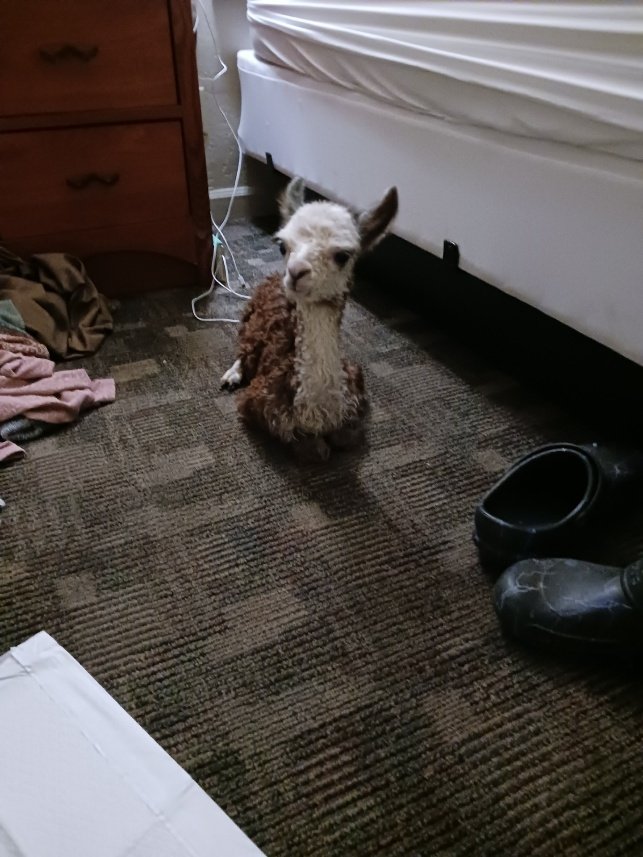

She lived with us in the house for the first three months. During that time, she seemed healthy, happy, and content being around the dogs. She especially loved to run.
In December, when temperatures were above 50 degrees, we began placing her in the sheep pasture for a few hours each day. The sheep were more curious about her than she was about them. Occasionally, the livestock guardian dog would accidentally smack her in the face with her tail, which happened to be right at Lucky’s head height.
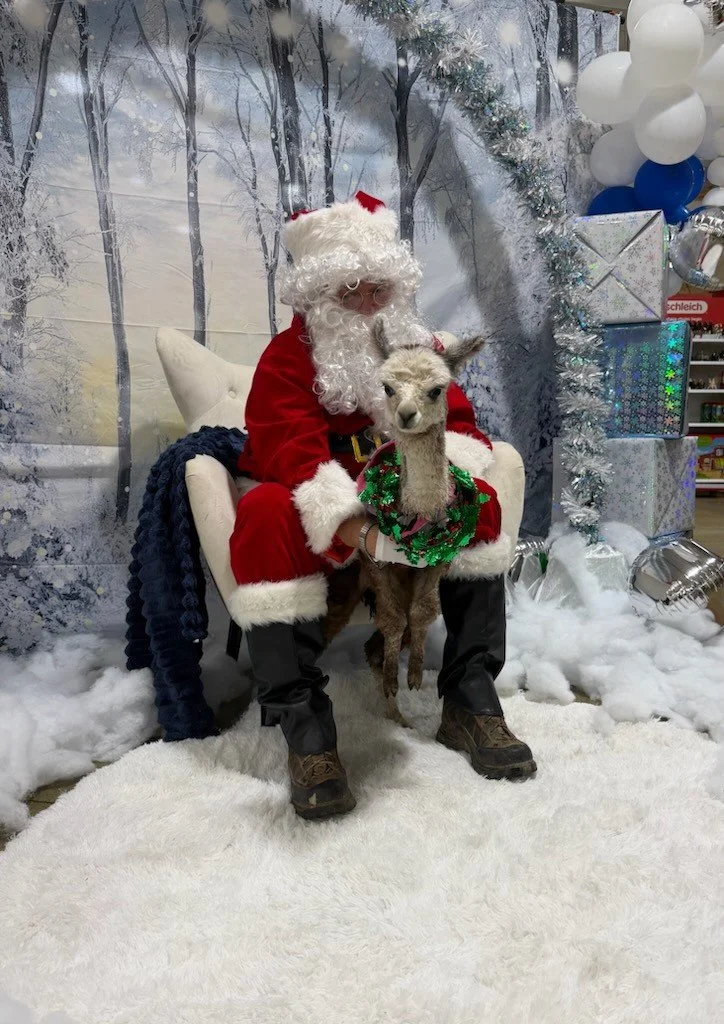
When Christmas came, Lucky participated in a Living Nativity presentation at a local church. Because of her small size, most people assumed she was a goat. She also had the chance to pose with Santa at our local Wilco store, where she quickly became the center of attention. Everyone in the store had their cameras out.
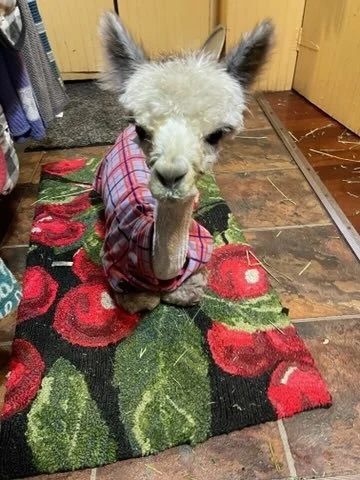
Lucky has remained very small. We sheared her along with the other alpacas, but even with a coat, she still needed time back inside the kitchen to stay warm. My daughter even created an AI rendering of her before she was sheared, capturing her cozy days indoors. She produced nearly two pounds of fiber.
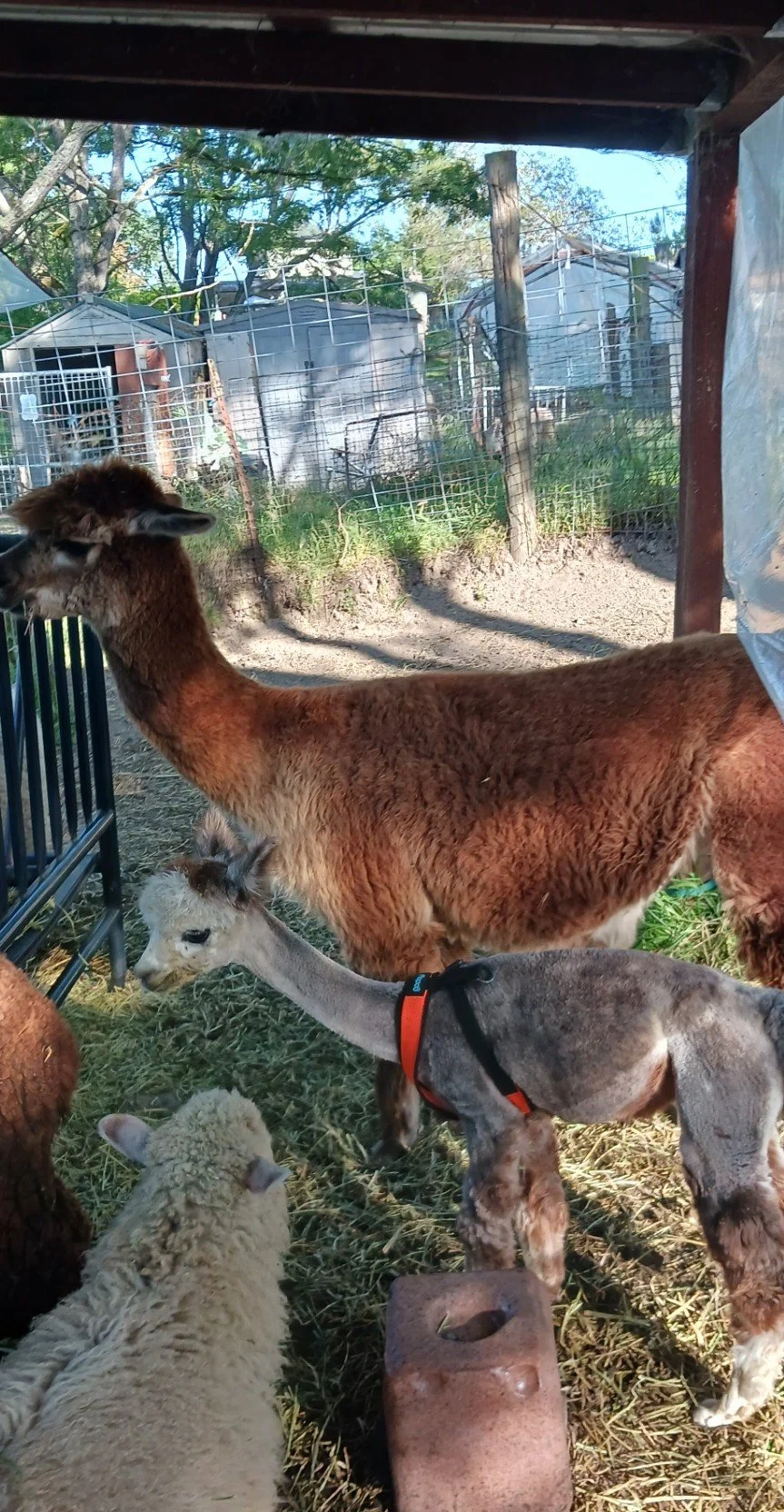
At eight months old, she weighs just 27 pounds and stands 24 inches at the shoulder. A growth spurt is still possible, but she may end up being one of the tiniest alpacas around. If you have one smaller, I’d love to hear about it.
(Below is a picture of Lucky and her mom.)
Have questions or interested in learning more?